

Campaign Overview
Launched in November 2017 as Voices for Momos, the Voices for Wildlife campaign began as a response to a sudden surge in elephant poaching in Myanmar. Initiated by a coalition of Myanmar’s leading conservation organizations, alongside government and corporate partners, the campaign aimed to mobilize the public, increase awareness, and end illegal trade of wildlife and wildlife products in Myanmar.
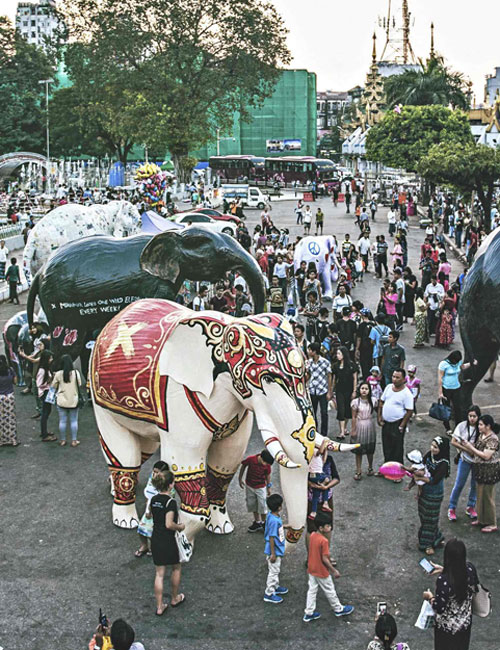
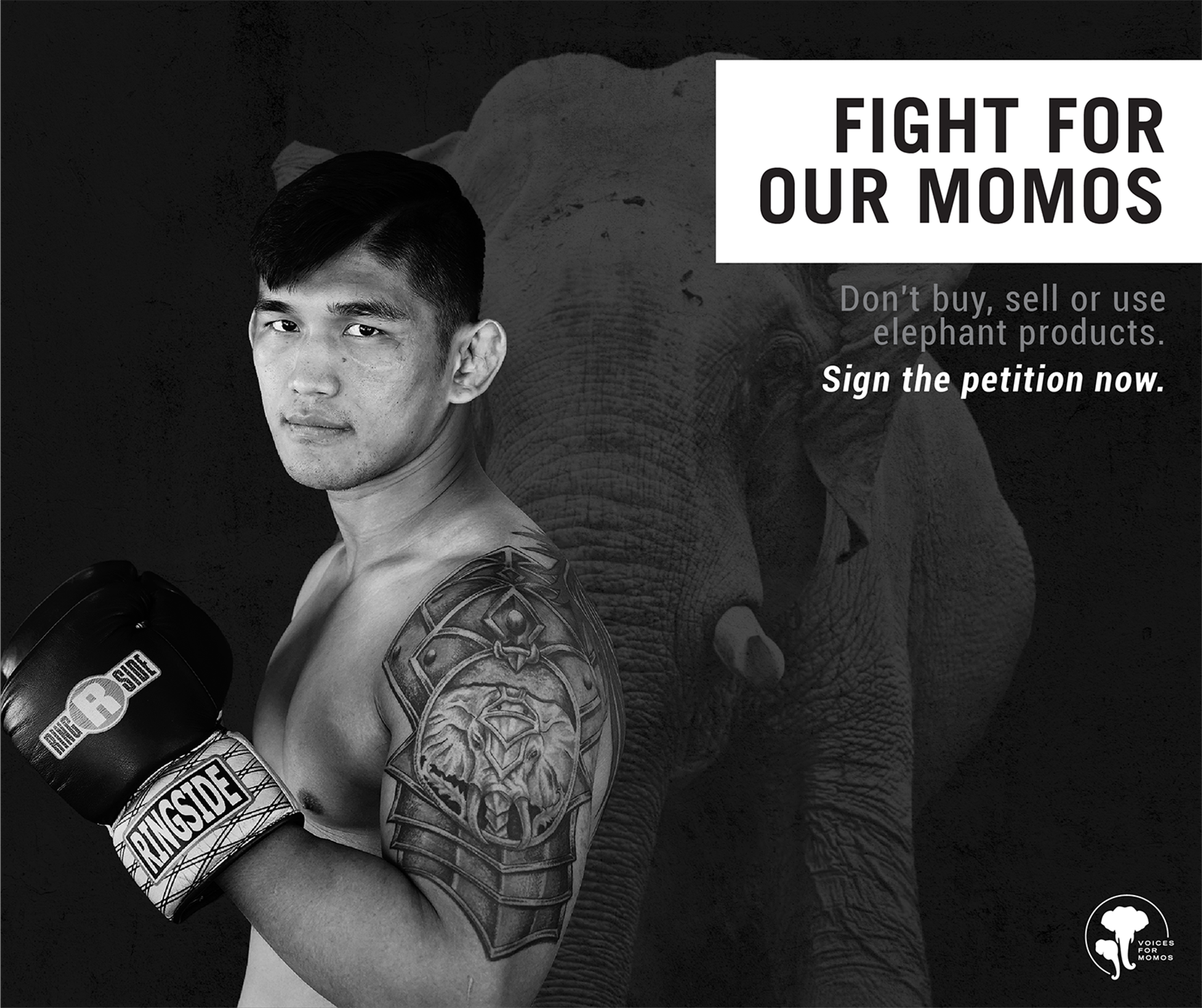
In 2017, The campaign’s name ‘Voices for Momos’ paid homage to “Momo,” a beloved elephant in Yangon, making the issue emotionally resonant for the public. Seven giant papier-mâché elephants marched through the streets of Yangon, sparking national attention and dialogue. A high-profile petition drive, supported by celebrities, influencers, and athletes, including WWF-Myanmar’s Ambassador in Fighting Wildlife Crime and ONE Championship Champion Aung La, amplified the call to action: to stop buying, selling, and using wildlife products.
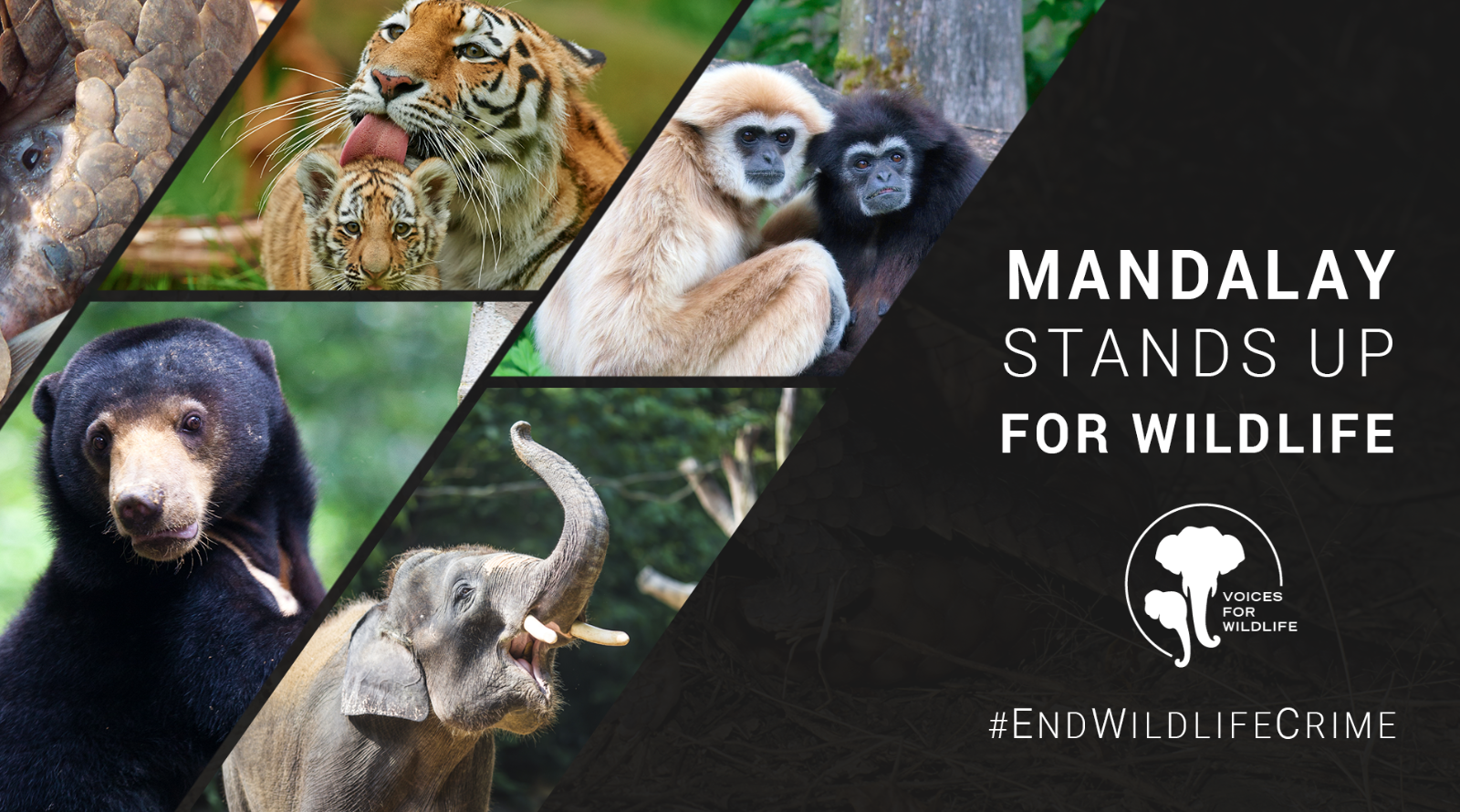
Building on the success in Yangon, the campaign expanded into Voices for Wildlife, tackling the broader issue of illegal wildlife trade across the country. Events like Myanmar’s first-ever wildlife music festival in Mahabandoola Park supported by the Embassy of Denmark and the groundbreaking Mandalay Street Parade for Wildlife brought together communities, culture, and conservation.
The campaign engaged authorities directly, resulting in strengthened regional commitments and enforcement against illegal wildlife trade. Through public outreach, cultural engagement, and strong partnerships, Voices for Wildlife became a milestone initiative in Myanmar’s conservation movement.
Outcomes & Results
The Voices for Wildlife campaign achieved significant and tangible results across policy, public engagement, and national awareness.
The papier-mâché elephants made my artists in Myanmar set a new second Guinness World Records for Myanmar, raising global awareness of elephant poaching and illegal wildlife trade in Myanmar. This reinforced public solidarity and put pressure on the local government to act firmly against this.
One of the most critical outcomes was Yangon and Mandalay regional government’s announcement of a ban on all illegal wildlife sales across the regions in 2018 and 2020 respectively. This decisive action ensured that anyone found selling or possessing illegal wildlife products, including bushmeat, would face enforcement under the Protection of Biodiversity and Protected Areas Law. This marked a major step forward in wildlife protection policy and demonstrated the government’s responsiveness to public pressure and advocacy.
In Mandalay, the campaign also achieved the commitment to follow up with capacity building training for the Mandalay Illegal Wildlife Trade Task Force, highlighting a growing institutional commitment to tackling wildlife crime at both local and national levels.
Through a strategic mix of advocacy, community engagement, cultural events, and policy influence, Voices for Wildlife successfully transformed public awareness into action. It not only brought national attention to the crisis of illegal wildlife trade but also built momentum for long-term conservation efforts in Myanmar.
Asset Types
- Social media posts
- Other video assets
- Video ads (for TV or online)
- Press release
Conditions of Reuse
The campaign concept may be adapted by other WWF offices. While the original creative assets cannot be reused, offices are welcome to recreate the campaign in their own tailored execution.
Get In Touch
For more information, reach out to WWF-Myanmar at mm.media@wwf.org.mm